Companies spend millions of hours on routine work: moving data between systems, answering standard emails, reconciling documents and preparing reports. AI automation lets them hand this work over to algorithms — and for entrepreneurs it becomes a full-fledged business: an agency or studio that designs, implements and maintains automated processes for clients.
How AI automation differs from classic automation
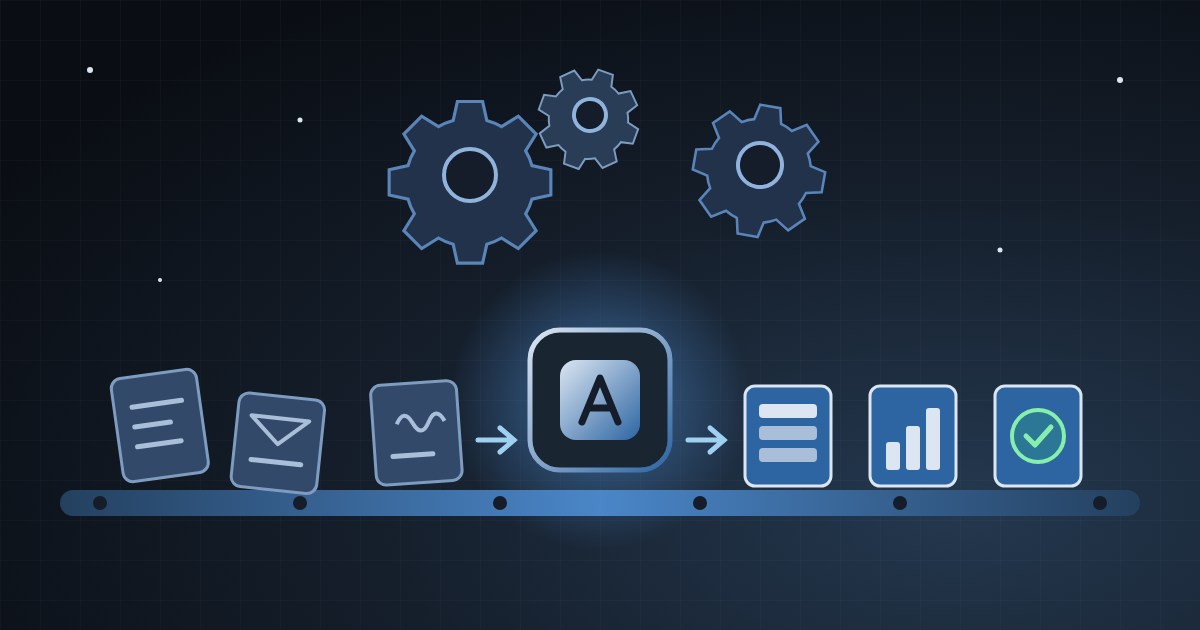
Classic automation follows rigid rules: if a field is filled in, copy it to a spreadsheet. AI automation handles unstructured data — emails, scans, voice messages, free text. It understands meaning, classifies, extracts data and makes simple decisions. This multiplies the range of tasks that can be automated.
What solutions companies buy
- Processing incoming emails and requests with automatic routing;
- Extracting data from invoices, contracts and delivery notes;
- Automatically preparing reports and analytical summaries;
- Generating and personalizing marketing content;
- Quality control: checking documents for errors and policy compliance.
How to build an automation business
Step 1. Specialize
An agency that "automates everything for everyone" loses in sales. Focus on an industry (logistics, real estate, e-commerce, healthcare) or a function (finance, support, HR). Specialization lets you reuse your work and show results faster.
Step 2. Audit the processes
Every project starts with a map of the client's processes: which operations repeat, how long they take and where errors occur. The audit can be sold as a separate paid service — it builds trust and becomes the basis of the commercial proposal.
Step 3. Pilot and metrics
Automate one process and measure the effect: hours saved, processing speed, error rate. Pilot figures are the main argument for extending the project to other departments.
Step 4. Ongoing support
Automated processes need maintenance: document formats change, models get updated, new scenarios appear. Monthly support turns one-off projects into recurring revenue.
Revenue models
- Project fees for designing and implementing a specific process.
- Subscription maintenance — support, monitoring and improvements.
- Performance-based fees — a share of the client's verified savings.
- Ready-made templates — standard industry solutions sold to many clients with minimal adaptation.
Automation payback period — the time it takes for the client's savings to cover the implementation cost. The shorter it is, the easier it is to sell the project to management.
How to sell automation to executives
Executives don't buy technology; they buy financial results. A commercial proposal should include the current cost of the process, the expected savings, the payback period and the risks. It is important to honestly compare the project's return with the company's cost of capital: automation that pays off in five years rarely interests a business.
Common risks
- Poor quality of source data, which causes models to make mistakes;
- Resistance from employees who see automation as a threat;
- Lack of oversight: critical decisions should be reviewed by a human;
- Security and personal data storage requirements.
Conclusion
AI automation is one of the most straightforward ways to make money with artificial intelligence. It solves expensive everyday problems, its effect is easy to measure, and the support model creates recurring income. Success depends on specialization, honest calculations and the ability to speak to clients in the language of money.
Prepared by the editorial team. For informational purposes only.